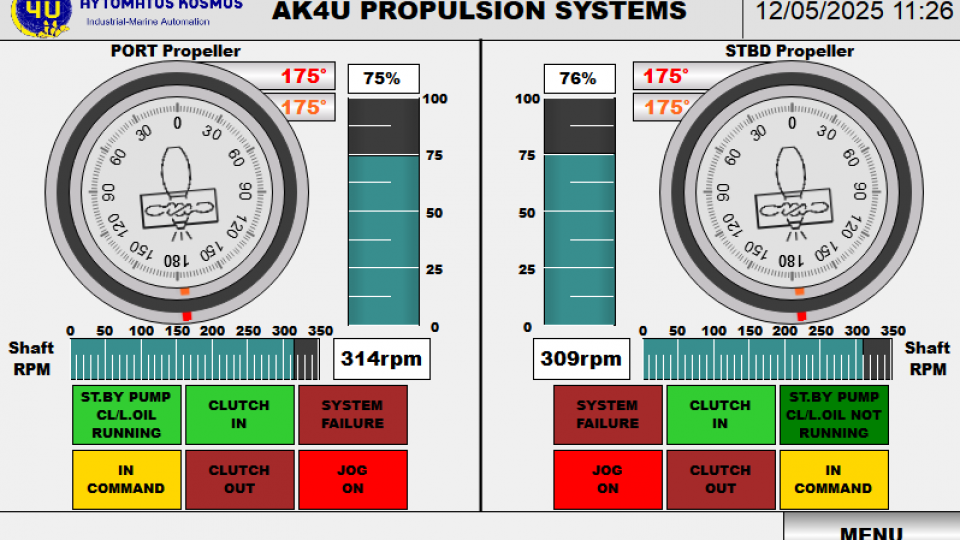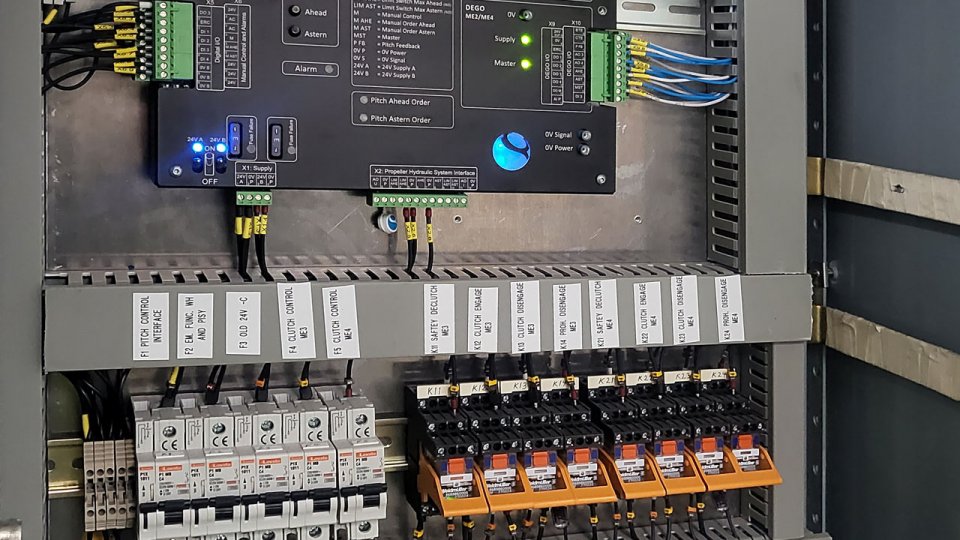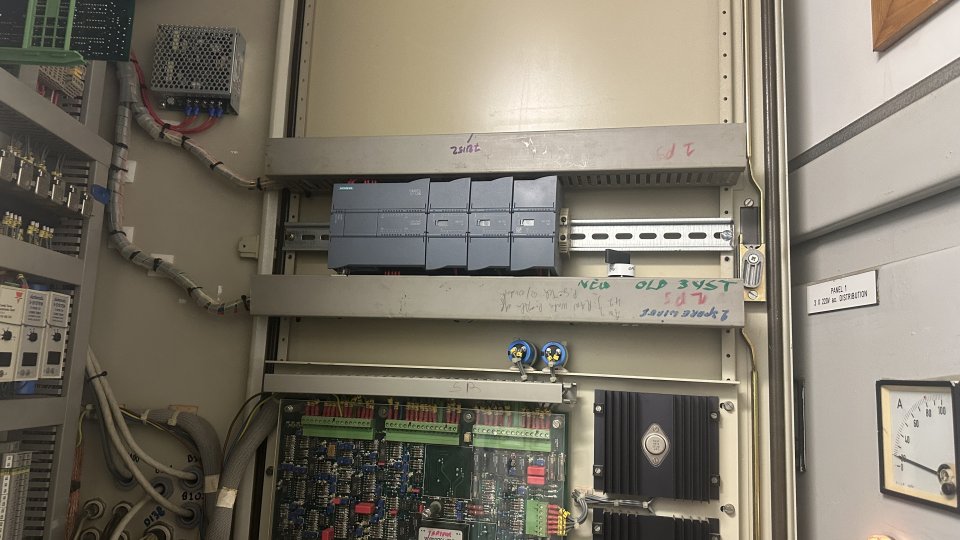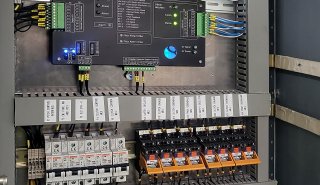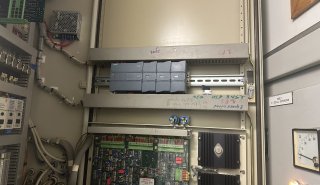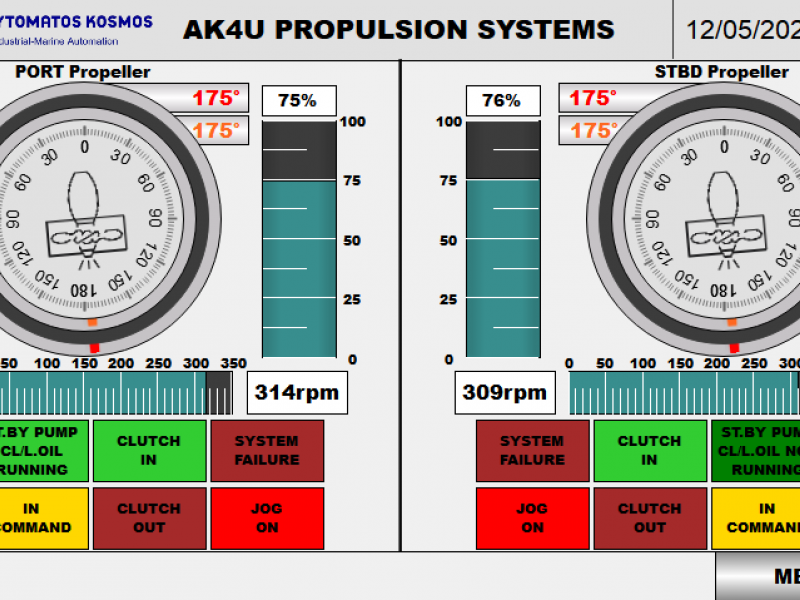
The Controller is the “heart” and “brain” of a vessel’s operations. It is a system or component used for the control, monitoring, and coordination of all critical subsystems, such as:
Main and auxiliary engines
Propulsion systems
Electrical power and distribution networks
Navigation and safety systems
By integrating advanced technologies, the Controller automates key processes, optimizes performance, and ensures that the vessel operates with maximum safety, reliability, and energy efficiency.
Engine and propulsion system control – Managing power, speed, and operational parameters.
Navigation and autopilot systems – Comprehensive route and safety control.
Electrical power management – Monitoring, controlling, and distributing electrical load.
Safety systems – Detecting and responding to critical situations.
HVAC and cooling systems – Automatic regulation of onboard environmental conditions.
Fuel and emissions management – Optimizing consumption and ensuring environmental compliance.
Data analysis and reporting – Performance tracking and providing operational insights.
Electronic and computer-based control systems
Control panels and switches
SCADA (Supervisory Control and Data Acquisition) systems
The implementation of a modern Controller is essential for achieving fully automated and highly efficient vessel operations. Specifically, it:
Reduces crew workload by automating critical processes.
Enables immediate response to potential issues, minimizing the risk of failures or accidents.
Improves sustainability through intelligent fuel, emissions, and maintenance management.
Enhances efficiency and operational continuity, ensuring optimal vessel performance.